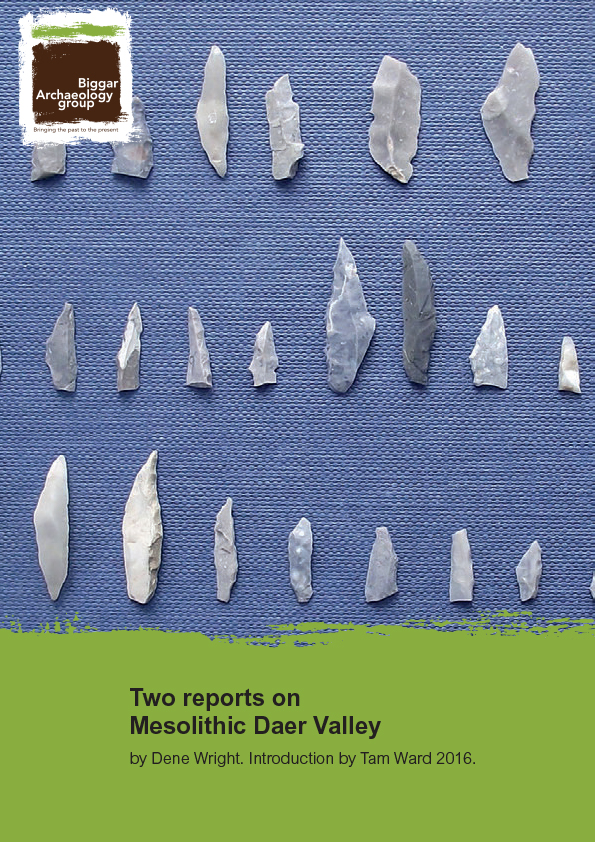
Selection of Microliths from Daer Valley excavation
The work of the Biggar Archaeological Group [BAG] has produced a significance corpus of data on the Scottish Mesolithic period. It has come from arable fieldwalking where lithic scatters have been retrieved and led to excavations, but more especially from excavations in Daer Reservoir and nearby forests which have produced in some instances complete assemblages of lithic, associated with charcoal enriched features and some C14 dating.
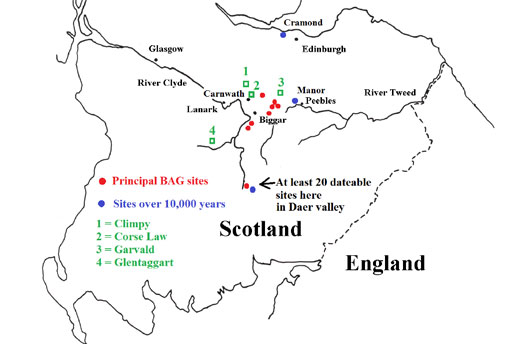
Mesolithic sites in Clydesdale and Daer
Nearly all this voluntary endeavour awaits specialist study and further radio carbon dating, in the meantime some new thoughts on the subject are presented by the writer along
with illustrations of sites and finds, the latter being mostly microliths. Some of the evidence suggest a link with the elusive Mesolithic-Neolithic transition.
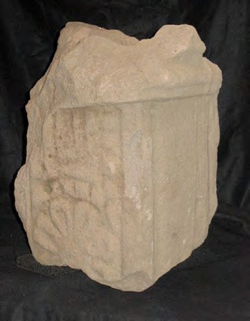
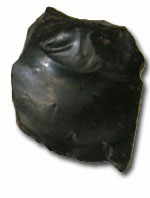
The stone, found by Peter Ryder, is part of a rectangular column of fairly course grained beige coloured sandstone. The two widest faces are carved while the other two sides appear plain.
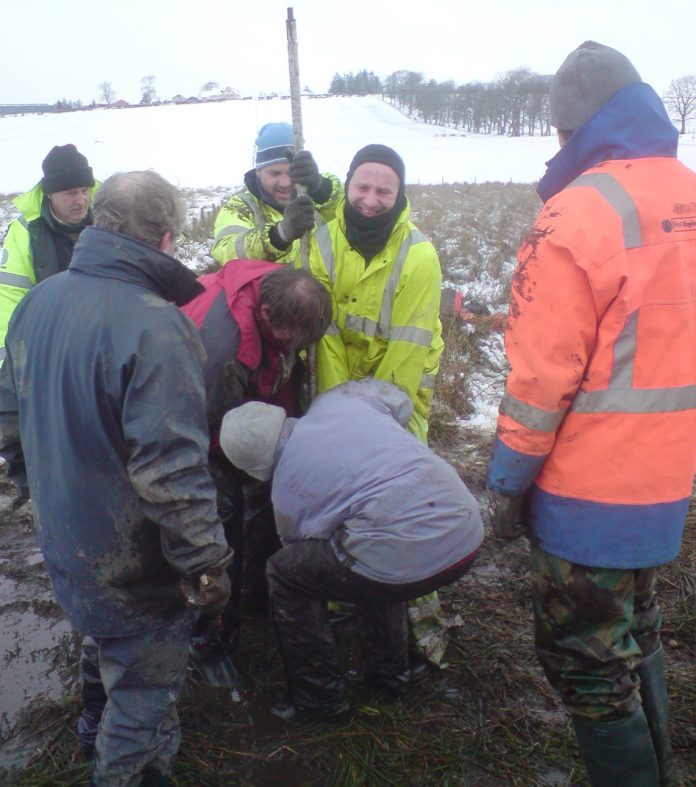
Sediment coring and the significance of the sediment stratigraphy beneath Strathbogie Plantation
Howburn Core sampling
The writer has consistently stated throughout his voluntary archaeological endeavours, which now span four decades, that he has no specialisation regarding finds analyses, and that includes many different periods of Scottish archaeology which he has been involved with. Rather the hope has been that such specialist input to the work of BAG would be imported through generous voluntary contributions and through his efforts to secure such work through grant funding.
To some extent both have been successful, and all assistance has been acknowledged in BAG reports, mostly necessarily Interim reports, but all faithfully published here, on the website, for the benefit of the world. However, the shear scope and volume of the work by BAG over the years has meant that neither method of securing specialist contributions, has been possible to deal with all the work accomplished by the Group. Indeed, it may be argued the time has come for the professional and more expert synthesis of all of BAG’s work, period by period, if a genuinely successful outcome to their contribution to Scottish and indeed, British archaeology is to be achieved.
Unfortunately, it has been perceived by the writer and further elucidated by a general lack of references to BAG work in academic journals and other publications, although there are a few exceptions, that much of BAG work apparently goes unnoticed! Indeed, he has been told on several occasions that the BAG web site is not considered as publication by many in the profession! It therefore is obvious that much important factual work, is escaping the attention of those who read the publications by professional archaeologists and historians.
In mitigating, the voluntary sector (the writer avoids the use of the word ‘amateur’ because of possible innuendo) can only do so much, because archaeology must play a secondary role in those participants lives, and be accomplished in whatever spare time they may have. If nothing else, BAG have clearly demonstrated not only the need for such voluntary groups in the face of heritage erosion, since much of BAG work has been on threatened sites, but the fact that they can contribute significantly to the national database of archaeological knowledge in Scotland.
It may seem hopeless to appeal for more support or interest from the profession in Scottish archaeology for the voluntary sector, since the profession itself is under resourced by state funding. The obvious case of diminishing curatorial archaeological staff in the National Museums need only be cited to demonstrate that, and the merging of Historic Scotland and the Royal Commission for the Ancient and Historical Monuments of Scotland, and their ‘rebranding’, presumably for financial expediency and efficiency, but in effect reducing staff and resources and the obvious ability to deliver to those who do want to know about their past, care about it, and need advice and help with it.
Regardless of what progress the writer may make regarding the proper synthesis of BAG work and more full publication of it, the entire record of their work, which includes many thousands of photographs and video tape, and of course finds and samples remains preserved in Biggar Museum under the best curatorial conditions.
Most of their findings have now a permanent home in Biggar Museum, where much is displayed to the public, also under the best professional standards, the material having been disposed through the former Finds Disposal Panel and through the Treasure Trove Directorate. By 2018 the entire collections recovered by BAG should have been legalised under Scottish TT, wherever they are disposed. Copies of all records and images are intended for deposition with Historic Environment by that time.
The legacy of BAG will therefore be assured for posterity, the BAG web site will be maintained as far as may be envisaged, but in the event of its demise, all the work of BAG will still be available to the public at large from both Biggar Museum and Historic Environment in Edinburgh.
The problem envisaged by the writer is that much of that work, although in the public domain through the BAG web site, and ultimately in the Historic Environment records, appears to be disregarded.
BAG have produced what may only be described as an astounding series of discoveries in some aspects of Scotland’s story, perhaps the most important being the finding of the Later Upper Palaeolithic site at Howburn Farm, pushing human history in Scotland back by some 3000 years. This site is currently being written up professionally and therefore will be well referenced, but hardly any other work by BAG! Most of the work of BAG has been written to a standard which is admitted being below academic quality, nevertheless, it is believed the factual aspects of the work are presented in a a way to allow for understanding and possible re-interpretation. Particular use is made of colour photographs of sites and objects to relay those facts, and in all interim reports the use of any data, in any form it is presented in is freely given.
The writer who has been almost solely responsible for the organisation of projects and the public dissemination of BAG work has endeavoured over the years to ensure access to it in as many ways as possible, this includesmuseum displays, lectures, events, heritage trails and of course the production of reports.
BAG believe they have made major contributions towards the better understanding of the Scottish Mesolithic, Neolithic, Bronze Age and Post Medieval periods in particular. Major comprehensive landscape surveys have also played an important part of their work in the areas of the upper Clyde and Tweed rivers, presenting hitherto unknown sites and monuments to the records, many with measured plans and photographs.
This paper bemoans the fact that little of the work accomplished by BAG volunteers appears to reach the public domain through any other channels than their own.
A few aspects of their work, a great deal of it in response to archaeology under threat of imminent or forthcoming destruction, is briefly outlined to make the point of BAG’s perceived importance of those efforts.
BAG projects in chronological order:
Late Upper Palaeolithic:
Howburn Farm, site dating to the Hamburgian period of hunter gatherers and dating to c14,000 BP. The site is unique in Britain and may truly be described as international archaeology.
Numerous sites dating to the Mesolithic, the principal ones are:
Weston, Brownsbank, Melbourne, Cornhill and Nether Hangingshaw (PDF) (all farms) and the almost incredulous range of sites in the Daer valley. All where a series of C14 dates are available and a wide range of lithic assemblages, some with unique components of lithic geology and some with possible links to the Neolithic.
The two largest Scottish assemblages of Early Neolithic pottery have been retrieved (both Biggar Common sites), pitchstone and ceramics have been C14 dated together in pits on these sites.
Melbourne (beaker burial), Camps Reservoir (Enclosed cremation cemeteries 2of), Fruid Reservoir (Unenclosed platform settlement houses 2of), have been discovered and excavated. Several burntmounds have been investigated and C14 dated in both Peeblesshire and Lanarkshire, BAG are responsible for the discovery and recording of over 300 examples of such sites in the area.
Sites dating to c1000 cal BP: [unpublished]
A series of lead smelting sites in Peeblesshire and Lanarkshire are uniquely C14 dated to c 899 – 1170 cal AD, and may be the earliest C14 dated lead smelting sites in Scotland.
Sites dating to the Post Medieval and later periods
Uniquely in British archaeology are the excavations of the following bastle house sites (pdf) in Lanarkshire; Glenochar, Wintercleuch (pdf), Smithwood, Windgate House (pdf) and research into the period. Other sites of comparable date are Logan and Chaplegill, both in Peeblesshire, one aspect of the work is the only archaeological evidence of the ‘Lowland Clearances (pdf)’.
Upland surveys
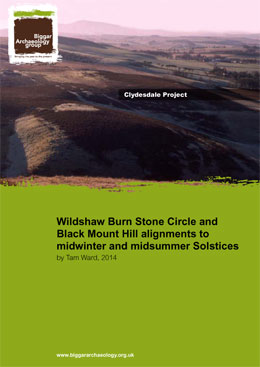
Extensive upland surveys in both Lanarkshire and Peeblesshire have considerably enhanced the data base, principally of pre-historic and post medieval sites of many types. Of particular note is the Wildshaw Burn Stone Circle which has now been thoroughly researched and shows numerous significant alignments over pairs of stones to the rising and setting sun at cardinal points of the year.
Other significant findings
The largest collection of archaeological pitchstone has been recovered from accurately plotted find spots and excavations during various projects, allowing for a better re-evaluation of this distinctive lithic from Arran; its date of use and function. BAG was the first to organise a ‘Pitchstone Seminar’ in 2000 to promote the study of Arran pitchstone.
From all of the prehistoric and early Medieval sites given above have come environmental samples of charcoal, many of which have been analysed and are C14 dated, giving an unusually large data set for environmental studies within a compact geographical area. These studies alone would now form the basis of a specialist report for the area.
Surely the research potential of the above work and other lesser projects must be enormous and each site has been presented on BAG web site as factual information, however, hypothesis is also offered in various reports on a variety of subjects. Yet it remains a fact thatwe’ve received very little interestfrom those employedby or study in archaeology. This does not seem conducive to a scientific approach to studies of the past.
The purpose of this piece is to appeal to the professional world of archaeology to consider taking some interest in the work of BAG, and the writer feels confident if that were to happen, then many more aspects of important Scottish archaeology would reach a wider audience and also make some difference to the general debate on Scotland’s past.
The fieldwork of BAG is now scaled down to almost nothing apart from occasional opportunities of rescue work as it presents itself. However, research on the extensive archive of BAG work and indeed that of others in the area will continue for a long time. The emphasis at this time is to consolidate all the work by presenting the entire archive to the National Monuments Records of Scotland.
The next two excavation reports will deal with the long awaited Camps Reservoir excavations of two enclosed cremation cemeteries, and one of the largest projects by the Group; Glenochar Bastle House and Fermtoun. Both reports are expected in the new year of 2017.
Visitors to Upper Clydesdale may be interested in the two of the three latest reports given here;
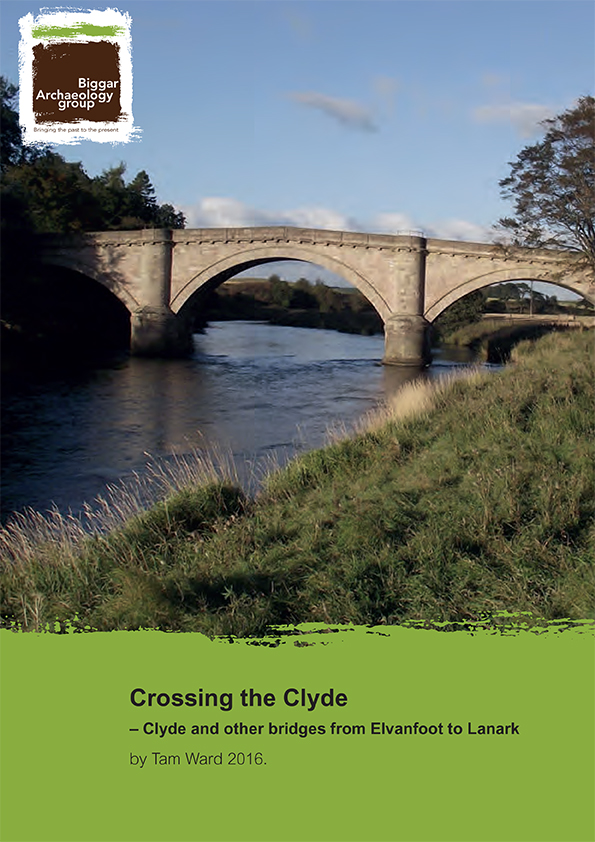
Crossing the Clyde report image
Crossing the Clyde
This Report has been written for people interested in the upper reaches of the River Clyde describing bridges past and present, which span the river in that area. Often a forgotten aspect of our heritage as one seldom gets a view of the bridges while we drive across them, and even more seldom does one get to learn of the fascinating history that surrounds these structures we all take for granted, but which makes life so much more convenient and safer for most of us. Crossing the Clyde – Clyde and other bridges from Elvanfoot to Lanark
On Tintock Tab report image
On Tintock Tap
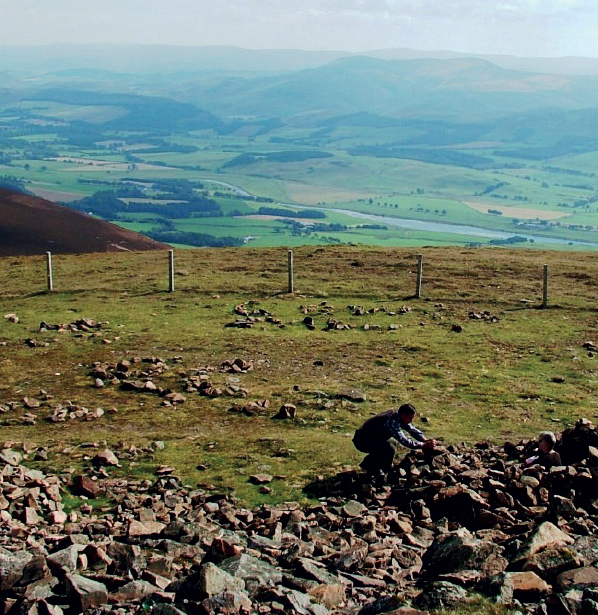
This will be of use to hill walkers, most especially to those who make the ascent to the summit of Tinto. The grand spectacle of landscape seen from the ancient cairn on Tinto has never before been explained in any detail, in this report you will get a ‘potted history’ of all you see in Clydesdale and bits beyond, including the geological story of this beautiful part of Scotland. On Tintock Tap – A report on Tinto Hill Lanarkshire
The third report is a specialist one by Dr Dene Wright of Glasgow University. Dene provides another two expert analyses of lithic assemblages from the numerous Mesolithic sites in Daer Valley. Details of the site’s [No’s 84 and 85] excavations are already given on the web. They are probably the highest Mesolithic camps sites in Scotland and along with other BAG Mesolithic sites are providing much needed new data on this remote period.
The next two excavation reports will deal with the long awaited Camps Reservoir excavations of two enclosed cremation cemeteries, and one of the largest pThe fieldwork of BAG is now scaled down to almost nothing apart from occasional opportunities of rescue work as it presents itself. However, research on the extensive archive of BAG work and indeed that of others in the area will continue for a long time. The emphasis at this time is to consolidate all the work by presenting the entire archive to the National Monuments Records of Scotland. Two reports on Mesolithic Daer Valley
Since 1997 the ploughed fields of Brownsbank Farm have been walked as part of The Pre-History North of Biggar Project. In the spring of 2000 a series of locations with surface scatters of Early Neolithic pottery was found in one field (No 4). Several locations were excavated (2000 –2001) to test for surviving in situ archaeology, and at one, a significant assemblage of pottery was retrieved, which was in association with Arran pitchstone, Langdale Pike Group VI axe flakes, a lithic assemblage and pits containing further pottery and charcoal enriched fills. Radiocarbon dates were obtained from two contexts.
This report is primarily the same as the first two interims (Ward 2000 & 2001) regarding the fieldwork, but with the additional inclusion of charcoal analyses, C14 dates, illustrations and with reference to subsequent relevant discoveries.
None of the finds have been professionally analysed and therefore comment regarding them by this writer must be considered as ‘non specialist’.
The Pre-History North of Biggar Project (PHNBP) has been running since 1995 as an arable fieldwalking project, to test a hypothesis that most evidence of early pre-history in Clydesdale and to the north of the town of Biggar, appears to have a Neolithic bias, while that to the south of Biggar is mostly Bronze Age. The value of the Project and the hypothesis is steadily being validated, most especially by the retrieval of objects and by the excavations by BAG at Biggar Common West and East, Weston Farm, Melbourne Farm, Carwood Farm, all to the north of Biggar. The work reported here is further evidence that the hypothesis is proving true, however, Neolithic assemblages have now been retrieved by BAG south of Biggar at Nether Hangingshaw Farm and at Daer Valley.
This report deals specifically with the excavation evidence at Brownsbank Farm, and also that from fieldwalking over most of the farm land, in as far as it can do without recourse to specialist analyses. Eventually more detailed results by professional analyses of the finds may be married with the findings of the various campaigns hereinafter described, and drawn together for the purpose of a final report.
This report, and previous interim reports should serve as a dire warning that a considerable amount of evidence of early pre-history is being lost annually by ploughing, at least in south central Scotland. It highlights the need for major programmes of arable fieldwalking to be undertaken nationally, and as a matter of some urgency. It also indicates the value of the Biggar based voluntary archaeologists who are willing to meet the challenge of saving our eroding and irreplaceable heritage.
The excavation site was discovered on Saturday 29th April and excavation was completed by the evening of May 1st as a matter of some urgency. The field was rotovated on on the 3rd May.
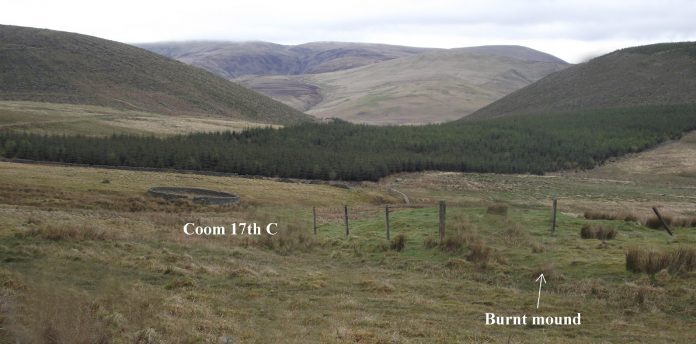
Survey and excavation trenches produced evidence of a series of buildings, their floors and finds dating to the 17th and 18th centuries on the previously unrecorded site of Coom.
A ruinous 19th century shepherds cottage lies beside the bastle remains and it is clear that the later house relied on the bastle for much if not all of its stonework, as may be seen especially by the dressed sand stone in the ruin, most especially window and door jamb stones, roof ridge stones, gun loops and even a fine mantelpiece
Download – The partial excavation of Glendoroch Bastle House, near Crawfordjohn, South Lanarkshire | 1.5MB | 2015 | Tam Ward, BAG | Partial excavation of a previously unrecorded building showed it to belong to the Bastle House tradition of building and formed one of a group of similar buildings to eventually be discovered and excavated by the Biggar Archaeology Group. Finds from the site substantiated the conclusion that the place was built circa 1600 and occupied until the early 19th century when it was replaced by shepherds cottage, built primarily from the bastle house itself.
Here are a few more reports on the work of BAG. The only remaining bastle excavation report is for Glenochar and this is in prep, Glenochar was the largest post medieval project done by BAG. There are still several other projects and research reports to bring to the web and these will follow as and when they are done, so please keep and eye out for them.
Harehill Knowe near Broughton, Peebleshire survey and excavation | 2015 | 554KB | Tam Ward, BAG | As part of a larger research project, itself originating from a programme of survey work in Upper Tweeddale by Biggar Archaeology Group, a trial trench was opened on a prominent isolated mound near Broughton and which is known as Harehill Knowe. The limited work showed that the feature was probably for the most part natural but with anthropogenic additions of a surrounding dyke, plantation and a capping of stone covering the overall mound.
Excavation of three Early Christian graves at Lyne, near Peebles | 2005 | 1.5MB | Tam Ward, Bag | The discovery of a single cist found to be eroding from a gravel bank led to the detection of a further two cists, all of which were shown by excavation to be long cists of Early Christian date. The site was consequently created into a heritage trail.
Broughton Heights Archaeological Survey | 1.5MB | 1999 | Tam Ward, BAG | Field walking and survey of an upland landscape in Borders Region has produced a new level of data on pre-historic and post medieval monuments. A significant series of burnt mounds in particular adds a new dimension to the study of the area.
The partial excavation of Glendoroch Bastle House, near Crawfordjohn, South Lanarkshire | 1.5MB | 2015 | Tam Ward, BAG | Partial excavation of a previously unrecorded building showed it to belong to the Bastle House tradition of building and formed one of a group of similar buildings to eventually be discovered and excavated by the Biggar Archaeology Group. Finds from the site substantiated the conclusion that the place was built circa 1600 and occupied until the early 19th century when it was replaced by shepherds cottage, built primarily from the bastle house itself.
We revisited some of the Daer 2012 excavations – sites 110, 111 and 126 on the morning of 20 December 2014 to test the winter solstice sunrise theory.
It had been thought that the sunrise might have been viewed through the entrances to the three bronze age circular stone settings but a beautifully clear sunrise was at 150 degrees on the South-west flank of Hitteril Hill – 34 degrees further south than anticipated. So no astronomical alignment but good to get an opportunity to test the theory before the trees grew too tall.
Site 111. shows inferred alignment (ranging rod) through circle centre and entrance with actual sunrise on South-west flank of Hitteril Hill.Site 126 again shows sunrise at 09.07 on South-west flank of Hitteril
Midsummer is coming soon and solstice watchers will be out at famous sites around the country. Here are a couple of easily accessed sites where spectacular results will be seen – if the sun shines! At Wildshaw Stone Circle both sunrise and sunset events can be seen while at Blackmount the sunrise is a beautiful sight, as seen in the report. Why not go along and witness these ancient celebrations yourself?
Here is the final interim chapter on the Daer valley project, it covers the work done within the reservoir in 2013, and brings some sites up to date while others are new discoveries.
In July 2013 the water levels were again reduced within the Daer Reservoir (Pl 1) due to dry summer conditions, this has been the first opportunity to investigate the reservoir since 2005 when the water levels were last reduced.
Known sites and locations were re-visited to inspect for erosion damage and a search was made to detect previously unrecorded sites. Photographs of known sites were taken and these may be compared to records from previous work (Ward 2013).
The opportunity was taken to resume work which had previously been planned and to engage in further work on sites where erosion was demonstrated to have taken place in the intervening years.
Wintercleuch Bastle House | 1.8MB | Tam Ward, BAG | Report on the excavation and consolidation of Wintercleuch Bastle House, Daer Valley, South Lanarkshire and it’s formation into a Heritage Trail. With specialist contributions by Dennis Gallagher, Ann Matheson, Robin Murdoch and Ian Paterson.
Daer First Results 2011 | September 2011 | Tam Ward, BAG |1.3KB| We have been working flat out for over a year to salvage as much
as possible from the Coom Rig site in Daer valley, where the forestry ploughing revealed an incredible and hitherto unknown
archaeological landscape. This reports explains the first results.
Daer Lithics 2011 | September 2011 | Ian Paterson | 729KB| Of the lithic materials recovered in the Daer excavation, chert is by
far the most abundant – forming some 96% of the total recovered from the 4 most prolific sites. This report discusses chert and the lithic finds from Daer.
Fieldwalking of forestry areas in Daer Valley 2010 – Interim Report | Nov 2010 |Tam Ward, BAG |972KB |Inspection of clear felled and newly ploughed forestry areas in the Daer Valley has produced evidence of the Mesolithic, Early Neolithic and Bronze Age periods, principally by lithic scatters for the former and burnt mounds/deposits and small cairns for the latter. Evidence in the form of Early Neolithic carinated bowl pottery, leaf arrow heads and pitchstone found in association with microliths and Mesolithic debitage, point to the Mesolithic/Neolithic transition.
Daer Valley Site 85 – Mesolithic |Dec 2004 | 1.3MB | This report describes the discovery and excavation of a further Mesolithic site in the Dar Valley.
Here is another Peeblesshire report from BAG on the excavation of two unenclosed platform settlements within the Fruid reservoir. This work is an important contribution to Bronze Age studies for Scotland and Borders Region in particular. Some new aspects of life in these peculiar hill side houses has been discovered, as a result of several years of dedicated work by the local voluntary archaeologists.
The second and third campaign of excavations on a normally submerged and eroding Bronze Age unenclosed platform settlement has produced constructional details of two timber round houses, artefact assemblages including pottery, course stone tools, a flanged bronze axe and important dateable contexts from which much charcoal has been retrieved. Further prehistoric sites and monuments and a post medieval settlement were also recorded.
A forthcoming report will attempt to marry up information between unenclosed platform settlements and burnt mounds in upper Clyde and Tweed valleys, part of which will supply up to date lists of each type of site.
The Daer valley project work is now brought up to date with the publication of all reports with the exception of the 2013 work within the reservoir, and which will appear on the web soon.
The 2013 fieldwork has produced yet another three Mesolithic sites and further work on post medieval sites was completed, all of which add an exciting new dimension to an already incredible story of a single valley in the Southern Uplands of Scotland.
The recent project in Daer forestry, featured on the Digging for Britain T/V programme. Tam Ward was describing the apparent association of Mesolithic and Early Neolithic sites and suggesting that the elusive Transition between the two periods may have been discovered. After the programme we had two radiocarbon dates done on samples from Site No 94, we thought this was the best of several sites to make the case, but they both came out around 5600 years ago, therefore, unless the Mesolithic presence on the site was incredibly late (which we don’t believe) then we have to conclude that what we found was a Mesolithic site with an Early Neolithic settlement imposed over it – in other words – NO TRANSITION. The full details of the dates will be given in the next and last report; Daer 2013, and to appear soon.
The full site report takes up over 400 pages so we’ve split them into sections below.
Lots of new reports on different subjects will now be appearing on the web, we are gradually catching up with the backlog and hope to have the entire work of BAG made available to the public by spring time of 2014, archiving of documentation and disposal of finds from the various sites is already underway. Keep and eye open on the web for new reports as they come on stream
Chaplegill | 2013 | 5MB | Tam Ward, BAG | Through the survey and partial excavation on an upland settlement site, evidence of turf and lime mortared buildings and occupation dating from the 17th to the 19th centuries was recovered. A large assemblage of early 18th century wine bottle sherds and also slip ware pottery was found and details of some of the buildings were revealed.
Lithic Geology | 2013 | 6MB | Ian Paterson & Tam Ward, BAG | In the past 30 years, the Biggar Archaeology Group (BAG) has recovered, by means of fieldwalking and excavation, large amounts of lithic artefacts that date from prehistoric times. The collection consists mainly of debitage but includes a range of tools and weapons. This account describes the geology of the various lithological types and suggests possible sources for them, and also provides illustrated examples and archaeological descriptions and contexts of each type as found by BAG. Furthermore observations regarding the use of stone in the construction of a stone circle, and for use as pot boilers in burnt mounds are given, and some metal working slags are referenced.
Excavations at Melbourne Farm 1996 | 2013 | 2.9MB | Tam Ward, BAG |Following on from successful fieldwalking at Melbourne Farm, four miles north of Biggar, excavations revealed a landscape of in situ features with ceramic and lithic assemblages dating from the Early and Late Neolithic, but including a beaker burial. Rescue excavation was allowed by the kind permission of Scottish Woodlands Ltd
The following report is given as a preamble to the main report on excavations and it has been modified slightly since it was written in 1996.
Migration routes | 2013 | 508KB | Tam Ward, BAG | Further thoughts on the migration routes of animals and people in the Late Upper Paleolithic period in the central belt of Scotland, and the potential locations of further hunter camp sites of that period.
Reports from pre 2010 – split into 6 parts, 1, 2, 3, 4a, 4b and now part 5. As well as one for Site 86
Dear Valley interim report
A new series of reports dealing with the Daer Valley Project will soon be streaming on to the web site. The reports will bring everyone up to date with the entire project which has grown from about 1985 when we first went looking for bastle house sites, and then in 1990 when we started our great adventure to re-survey the entire upper reaches of the River Clyde. We eventually found three bastle sites and to our great surprise and delight located hundreds of prehistoric sites and objects on the hills and in the reservoir and forests there.
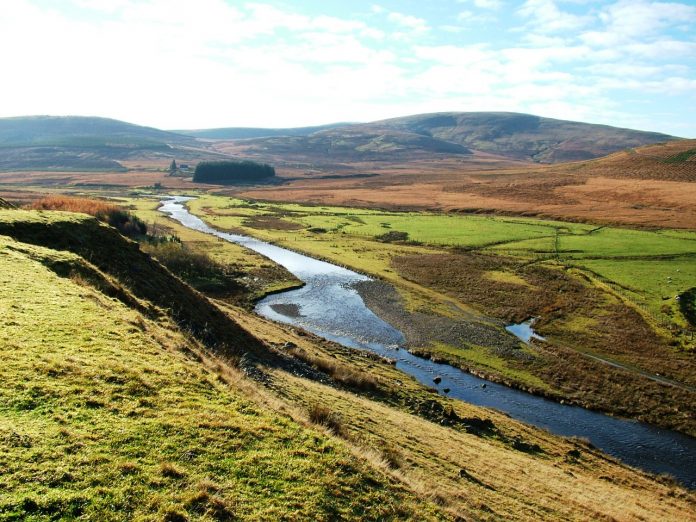
The valley could boast three archaeological sites before we arrived; a cairn and another one which had been removed in the 19th century, and a supposed tower house which lay beneath the water of the reservoir. The story has changed so dramatically that some parts of Scotland’s history will be re written as a consequence, and that story will continue if a major project proposed by Glasgow University comes about. We hope to have all the prehistoric work we’ve done scrutinised by professional analyses, with even more radio carbon dates and other scientific work completed on finds and samples. It’s a ‘watch this space’ scenario and if it comes off we are confident that a major contribution to Scotland’s past will be made. Reports on all our outstanding projects are also in prep and some of these will also appear very soon, we hope you will enjoy reading them and looking at our illustrations. We welcome any enquiries regarding our work.
The investigation of a small valley in Upper Tweeddale, Scottish Borders, has produced an extraordinary story of the past dating from the Bronze Age to Post Medieval times. The excavation of an upland settlement at Logan revealed the remains of a previously unrecorded tower or bastle house. Other buildings were shown to have been occupied throughout the 17th century and up to the early 18th century, indicating an aspect of Lowland Clearances. A small hoard of Edward I silver long cross pennies was also found near the site.
A series of test pits were opened on a gravelly ridge (Site No 1) to test the hypothesis that Early Christian archaeology may have been
present. The results were inconclusive but did reveal that some pre historic activity had taken place involving a flint scraper and a few flakes of radiolarian chert and burnt stone. A further ridge (Site No 2) was also investigated and here two small cists were revealed and which by their size are assumed to be Bronze Age children’s graves.
This year reports will stream onto the web site on a number of topics, but most of them will cover work actually done by BAG.
We commend these articles to others in the hope that specialists may take the data and the stories further than we are able to do, because of who we are and the extremely limited resources at our disposal.
In order to make these reports downloadable we’ve kept the file sizes as small as possible – which means images and diagrams are low resolution. We have high resolution files available – and these are available by contacting us and they will be made available, (at the cost of a disc and postage if necessary).
The next batch of reports to appear will be individual sites from our DAER valley project; once again, we think a mass of new information will be of interest to archaeologists, and these reports will deal with archaeology from the Mesolithic to the present in the valley.
These two reports go hand in hand and the purpose is to highlight the major issue of inland erosion of archaeological sites and the need for people to deal with it – or loose it! The experience of BAG is given in the reports in the hope that authorities will take note of what is being stated in the first, and that prospective volunteers will once more take a lead in Scottish archaeology, gaining confidence to engage with archaeology in the field.
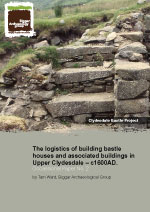
BASTLE BUILDING is an attempt to make some sense of the logistics of building 17th and 18th century homes in the Southern Uplands of Scotland. The first attempt at this matter will definitely require being refined as much information is presently missing and further research is needed. However, it is a start, and will at least set some parameters for more investigation, especially of existing records.
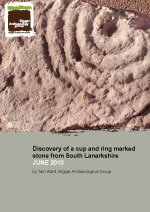
The report on CUP MARKED stones and other pre historic rock art from the local area, will allow the reader a better grasp of what has been found of this rather elusive subject matter. New discoveries continue to be made showing the story will go on and on.
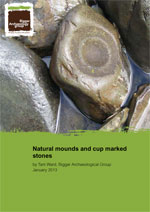
NATURAL MOUNDS and CUP MARKS attempts to clarify these aspects of the landscape, nature produces many wonderful effects and features and often these may be confusing, hopefully this will help in our part of the world and beyond.
Wildshaw Burn is the only known stone circle in Lanarkshire despite the plethora of pre historic remains of all periods in that area.
Numerous examples of circles may be seen scattered across Dumfries and Galloway to the south and stretching from the Irish to the North Seas, but otherwise such monuments are rare in southern Scotland. Wildshaw fills a huge void in the map of such sites in south central and western Scotland.
It has not been established whether the Wildshaw monument was completed or even if it was actually built, but the available visible evidence of the stones in their present configuration and taken with the observations which have been made since its discovery, clearly shows intent to use the place as a solar observatory. More information on this can be read in the report which can be downloaded (PDF 2.74mb).
The stone circle was originally discovered by BAG back in 1989 during our voluntary survey of the corridor of land which was to become the new M74 motorway.
We are pleased to present the Daer report which deals with how the project came about, how we did it and some preliminary results.
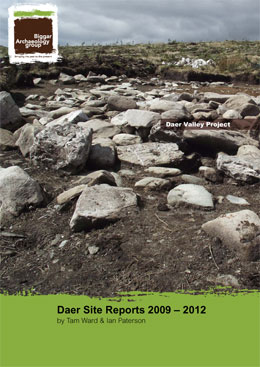
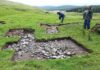
Still to come are a long series of individual site reports, mainly Mesolithic and Neolithic locations, these fully illustrated reports will help to make sense of the preliminary conclusions reached here. Site 110, 111 and 126 can be downloaded from the report archive.
Ploughing for a new forestry plantation in Daer Valley, South Lanarkshire revealed an unprecedented pre historic landscape in southern Scotland. Sites dating (on artefact evidence) to the Mesolithic, Neolithic and Bronze Ages were discovered by walking plough furrows, and then selected locations were investigated by excavation. Further sites were located by random test pitting. Several new aspects of Scottish pre history were discovered, including the possible transition between the Mesolithic and the Neolithic, haematite being used as a colouring agent in early pre-history and certainly in the Mesolithic, and several lithic types being recorded for the first time. Download the PDF (1.8MB) to read more.
In the spring of 2023 the members of the Biggar Archaeology Group with the support of Peeblesshire Archaeological Society and Scottish Borders Council surveyed...