
Lime clamp kiln at Glencotho excavation in 2015
An Excavation report on the lime clamp kilns at Glencotho, Peeblesshire, Scottish Borders in 2015. Download the full report from here.
The excavated kiln is...

Lime clamp kiln at Glencotho excavation 2015
Excavation of a lime clamp kiln at Glencotho, Peeblesshire, Scottish Borders.
BAG Lime kiln Report

Kirkbank Earthworks, Broughton
Early OS surveys of the Kirkbank Earthworks, Broughton (NT 110370) indicated a fort site and subsequent RCAHMS reports suggested iron age. Recent removal of...

Talla Reservoir
Talla Reservoir
A part of the Tweed project is to deal with the tangible remains of works associated with the construction of Talla Reservoir. The...

Woodend Bronze Age cemetery
The Woodend Bronze Age cemetery was investigated to include it in an area as a visitor attraction.
The site had been explored in the 1930’s...
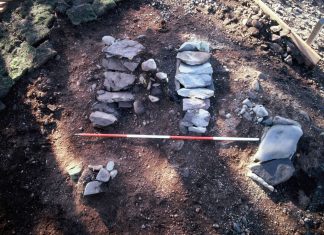
Lyne Early Christian Cemetery
The Lyne cist cemetery was discovered by chance by David Cowley and his partner Sharon while visiting the nearby Roman fort.
A cist was found...
Manor Valley
Lead Smelting and Burnt Mounds
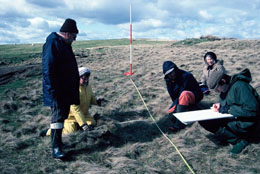
The Manor Valley was chosen as a suitable area for teaching surveying methods to members of the newly founded (1995)...

Megget Reservoir
Megget Reservoir lies just outside the Peeblesshire boundary. However, the Tweed survey was continued over the Talla watershed because unusually low water levels in...
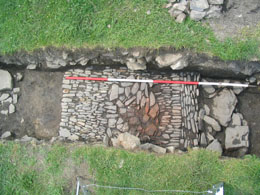
Glencotho lime kilns and deserted settlement
Lime Kilns
The existence of three clamp kilns, located close to Glencotho House, a little over 3 km SW of Broughton, has been known for...
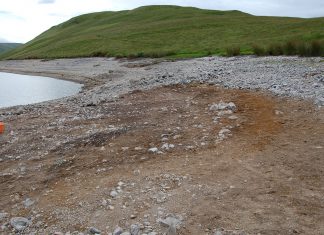
Fruid Reservoir
Fruid Reservoir
The landscape survey of Fruid Reservoir, carried out as part of the Upper Tweed Project, identified numerous archaeological features including an unenclosed platform...


Broughton Heights Archaeological Survey in 1999
Download – Broughton Heights Archaeological Survey | 1.5MB | 1999 | Tam Ward, BAG |
Field walking and survey of an upland landscape in Borders...

Excavation report of the three Early Christian graves at Lyne, in 2005
Download – Excavation of three Early Christian graves at Lyne, near Peebles | 2005 | 1.5MB | Tam Ward, Bag |
The discovery of a...

Harehill Knowe survey & excavation
Download – Harehill Knowe near Broughton, Peebleshire survey and excavation | 2015 | 554KB | Tam Ward, BAG |
As part of a larger research...

Fruid Reservoir unenclosed platform settlements report
Biggar Archaeology Group PDF Reports. info@biggararchaeology.org.uk

Chapelgill in Glenholm survey and excavation in 2013
Download – Chapelgill survey and excavation | 2013 | 5MB | Tam Ward, BAG |
Through the survey and partial excavation on an upland settlement...
Reports on various projects
Biggar Archaeology Group PDF Reports. info@biggararchaeology.org.uk
Upper Tweed Project Reports for Logan and Woodend
Biggar Archaeology Group PDF Reports. info@biggararchaeology.org.uk
Post medieval site of Logan
We are now able to show that settlements from c1600 to c1750 were becoming more materialistic than previously. Consumption of tobacco and wine is...